Grain Matching: Why Doors, Panels and Cabinets Belong Together
When doors, wall panels and cabinets come from three different suppliers, the walnut never quite matches. Here is how a single supplier keeps tone and grain continuous across an entire interior.
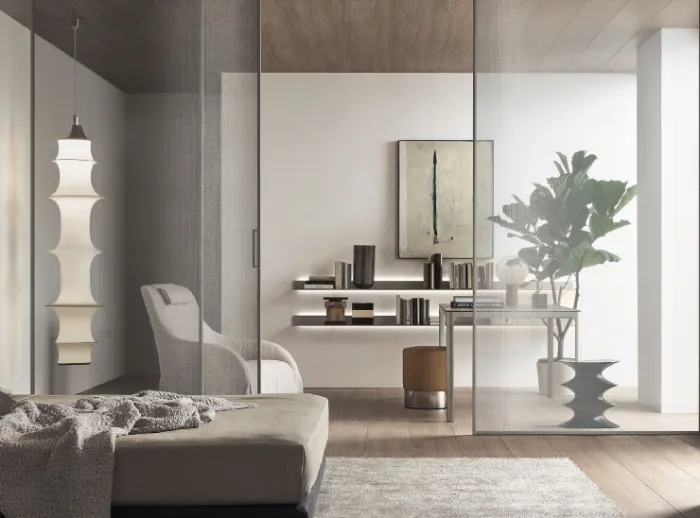
The problem with three trades
Wood veneer is a natural product. Two walnut logs — even from the same region — differ in colour, figure and how they take a finish. When a door maker, a panel installer and a cabinet shop each buy their own veneer and mix their own stain, the result is three slightly different browns in the same room. Under daylight the difference is obvious, and it cannot be corrected once the pieces are installed.
Scheduling makes it worse. Each trade measures, produces and delivers on its own timeline, so tolerances and reveals rarely line up where a door meets a panel or a panel meets a cabinet.
What grain matching actually means
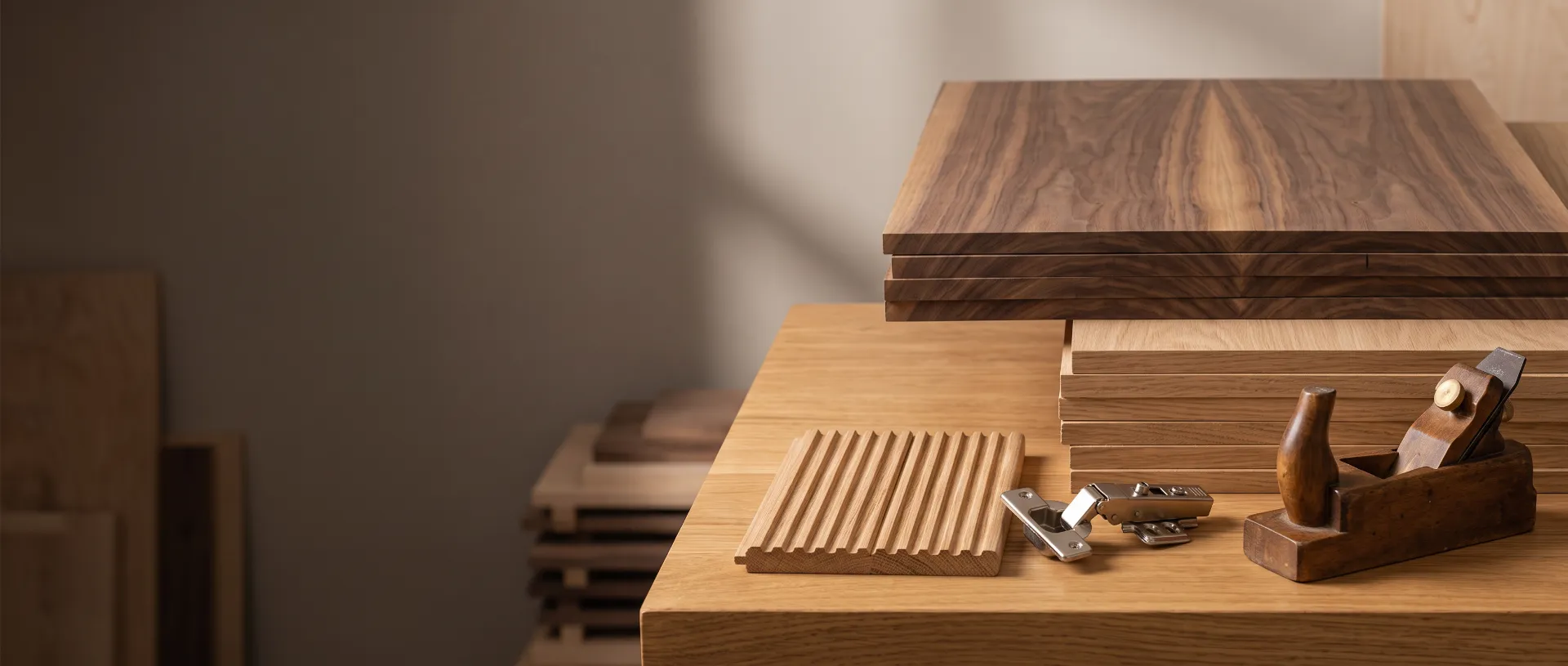
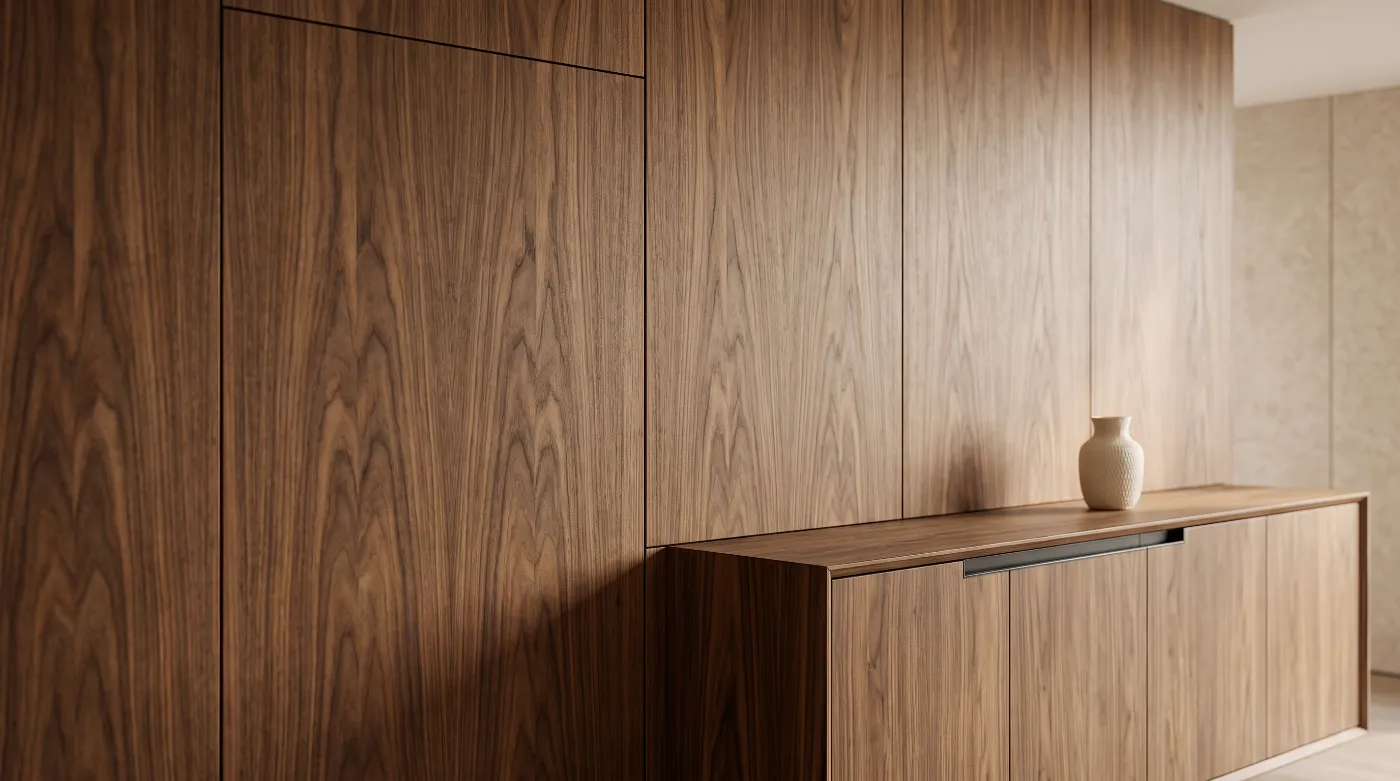
Veneer is sliced from the log in thin leaves that stay in sequence. Matching means laying out those leaves in order so the figure flows from one surface to the next. There are three common patterns:
- Book matching — every other leaf is turned over like the pages of a book, creating a mirrored pattern at each joint.
- Slip matching — leaves are placed side by side in sequence, giving a repeating, more linear look that suits tall doors and panels.
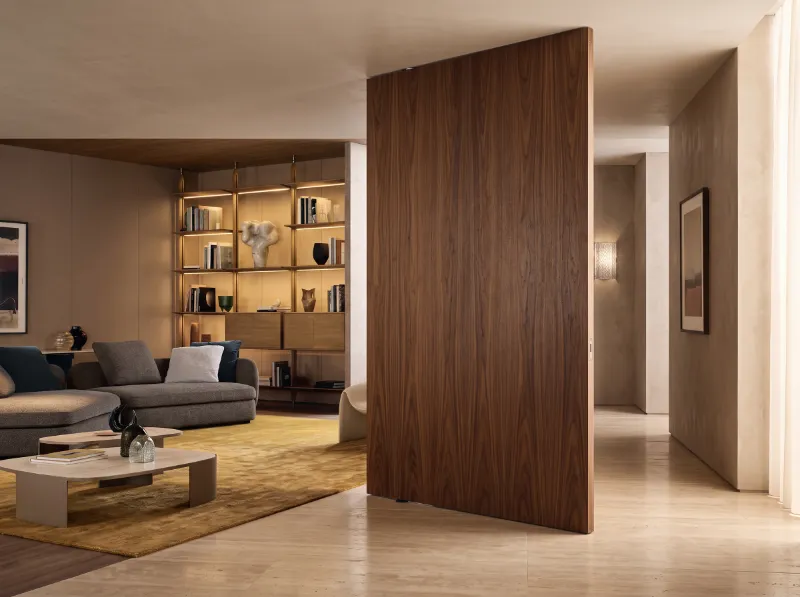
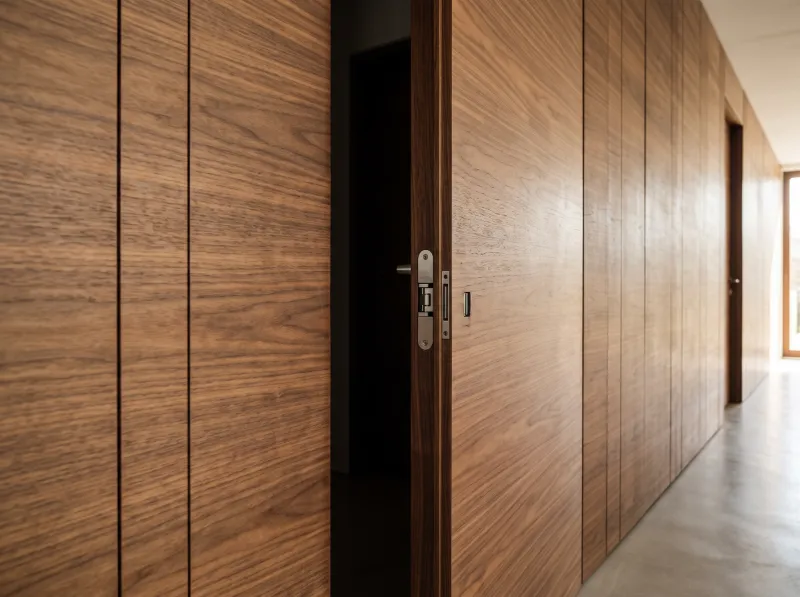
- Sequence matching across a wall — panels, doors and cabinet fronts are cut from consecutive leaves so the grain continues around the room.
“The room you approve on paper should be the room that arrives on site — that only works when one team controls the veneer from log to installation.”
How we keep it consistent
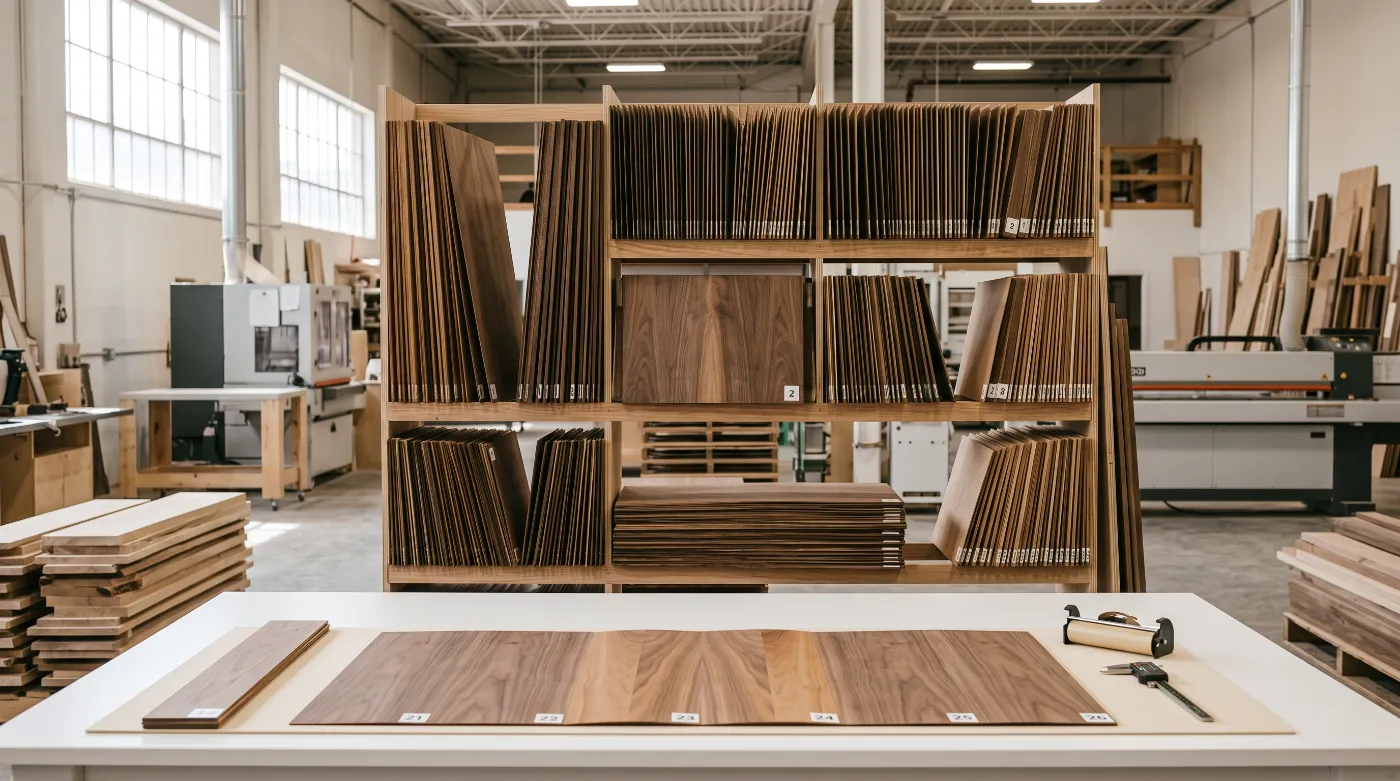
At DWC Millwork, doors, wall panels and cabinets for the same room are produced together. The veneer for your project is reserved as one batch and the lacquer or stain is mixed once, then used on every piece.
- You approve production drawings showing where each door, panel and cabinet sits.
- We send real photos of the veneer reserved for your order.
- Leaves are numbered and cut in sequence, then finished together.
- Every piece is inspected against the drawing and packed by room.
When it matters most
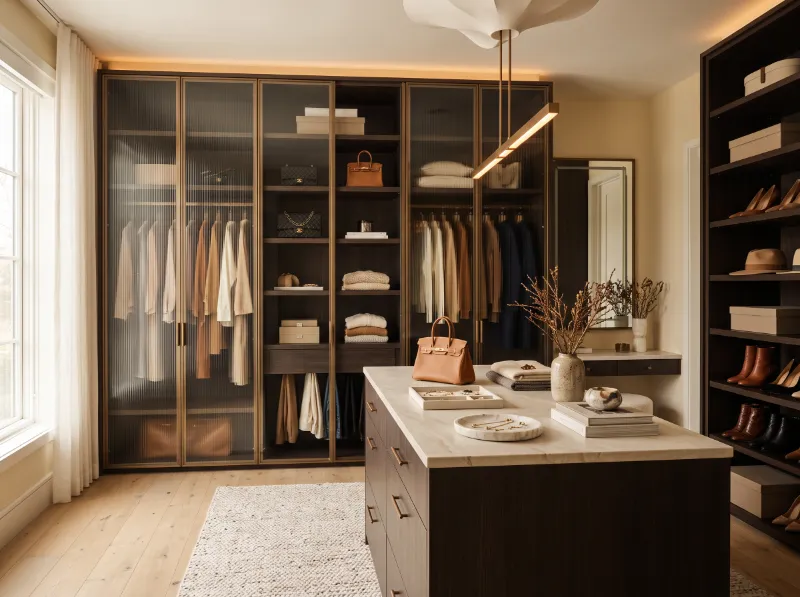
Grain matching makes the biggest difference where surfaces meet at eye level: entrance halls with concealed doors, living rooms with a panelled TV wall, and bedrooms where the wardrobe continues the wall. In these rooms, an integrated approach is what turns good joinery into a calm, coherent interior.